Coloured AC sheeting smoothed surfaced on both faces, with the colour appearing on one face only. Flat and curved sheets. Outer surface usually covered with a plastic finish which provided a satin-type finish.
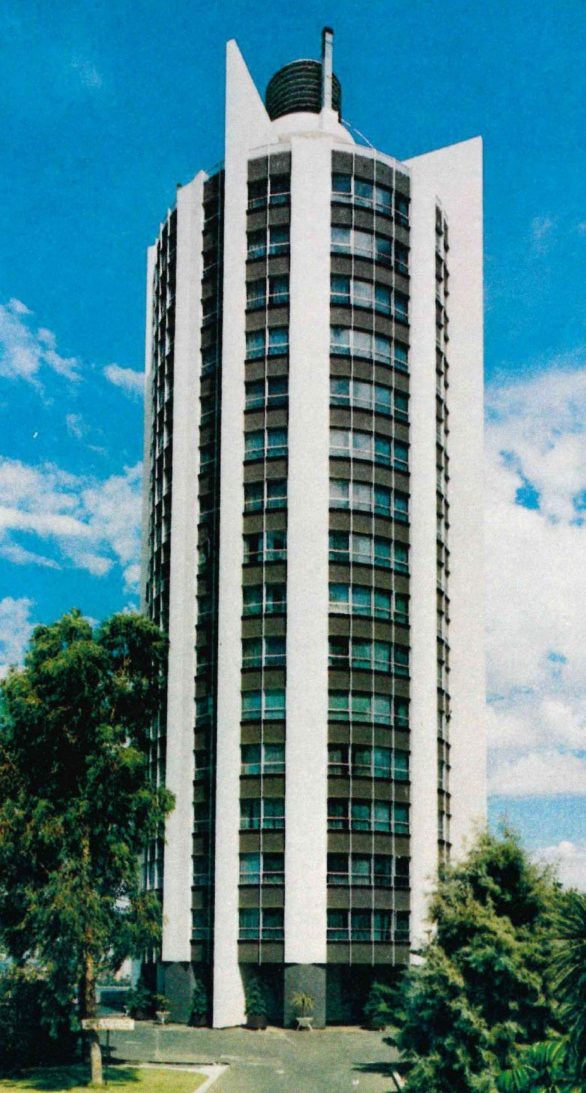
Used for curtain walling, spandrel panels and applied as double sheets back-to-back, such as in external balustrades.
Asbestos Products Ltd produced a coloured AC sheet named Artbestos in the 1930s for interior/exterior use. Colours listed as: Grove green, Sky blue, Stucco brown, Ochre, Shell pink, Cream and Buff.
In the 1950s an imported product named AC Glasal (also known as just ‘Glasal’) was known to be marketed in the ACT. AC Glasal was a fully compressed coloured sheeting with a vitreous enamel finish and produced by Eternit in Belgium. Marketed for interior wet areas and external spandrel panels. It is thought this was an identical product to the Colorbord sheeting. Glasal was extensively used throughout Europe and the UK.
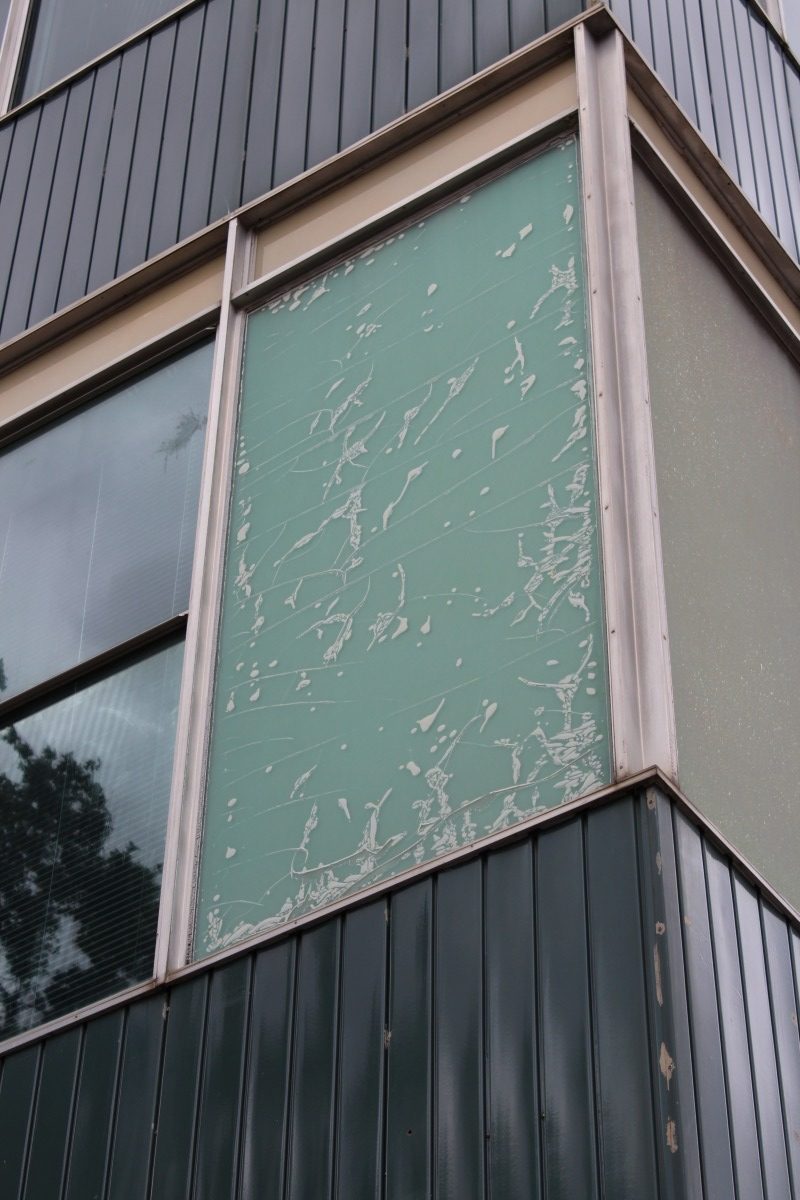
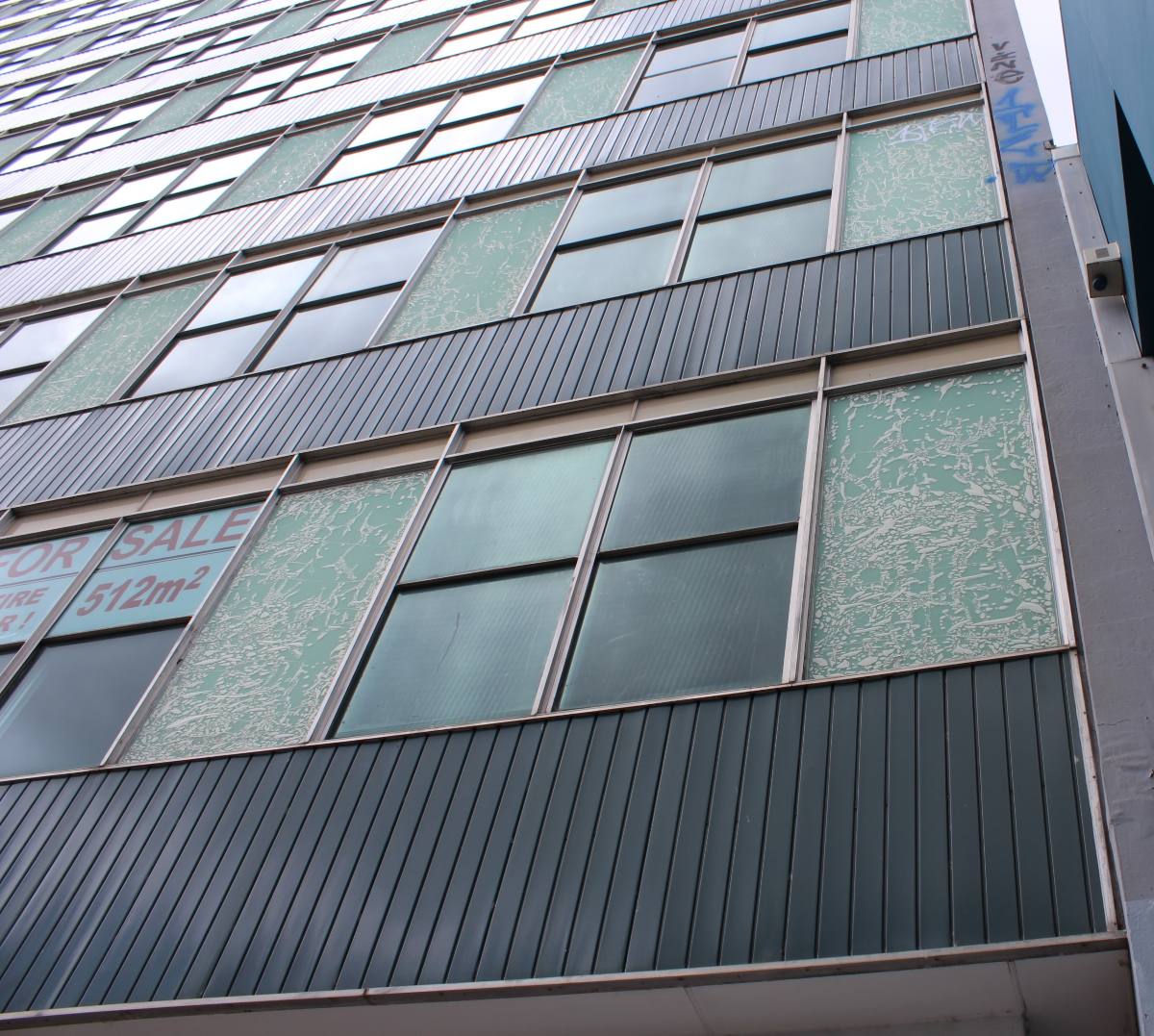
Like other AC based product exposed to weather elements and subject to varying temperatures and rainfall, they will degrade over time. Cracking will allow water and air ingress causing delamination of the surface covering.
Brands/products
Colorbord
Note: Not Colorboard – a BurnieBoard wood product
Artbestos
AC Glasal (Eternit Belgium)
Years of production/use
Prior to 1990
Colorbord was a James Hardie product from 1960 to the early 1980s. Produced much in the same was as their Tilux product and described as a smooth faced compressed AC pre-finished sheet. used for both internal and external applications. The coloured AC sheeting market in Australia was dominated by James Hardie.
Described in Hardie’s literature (1980) as a fully compressed dense surface with a smooth pre-coloured finish on one face. The colour impregnated surface will not accept adhesives, paint or other applied finishes, whereas the rear side could accept adhesives. The surface of Colorbord was advertised as moisture proof, however moisture infiltration of base sheets at unprotected edges could cause discolouration.
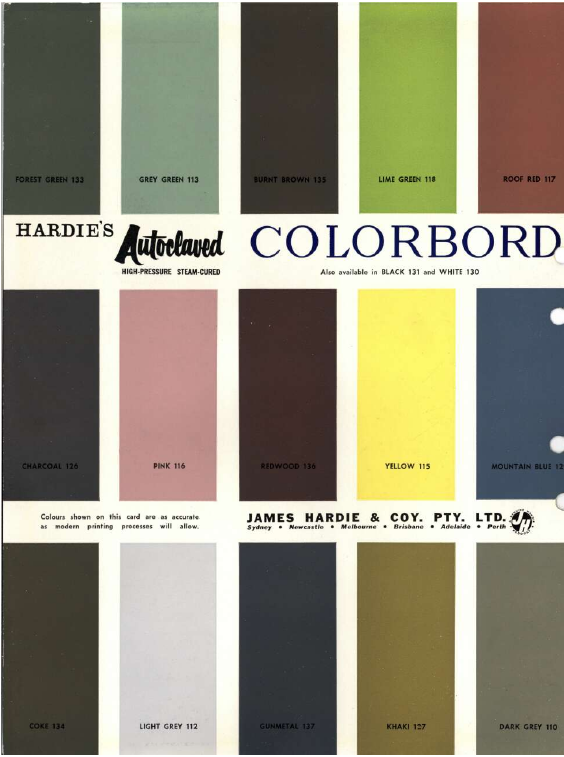
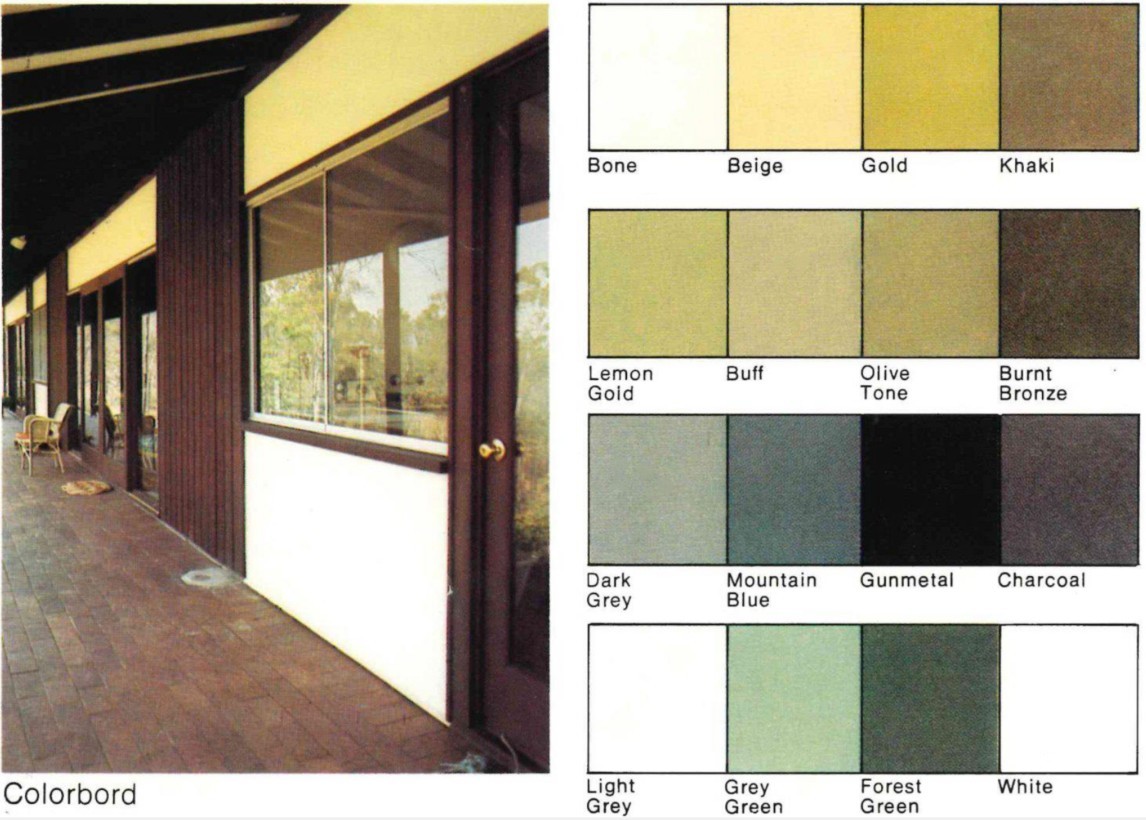
The Colorbord range of colours and their market names varied slightly with an extended colour range introduced in 1967. By 1980 the colour range was reduced back to 14 colours.
Residential uses
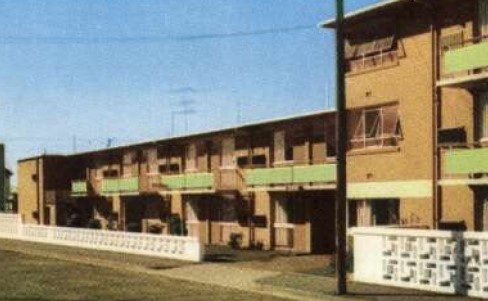
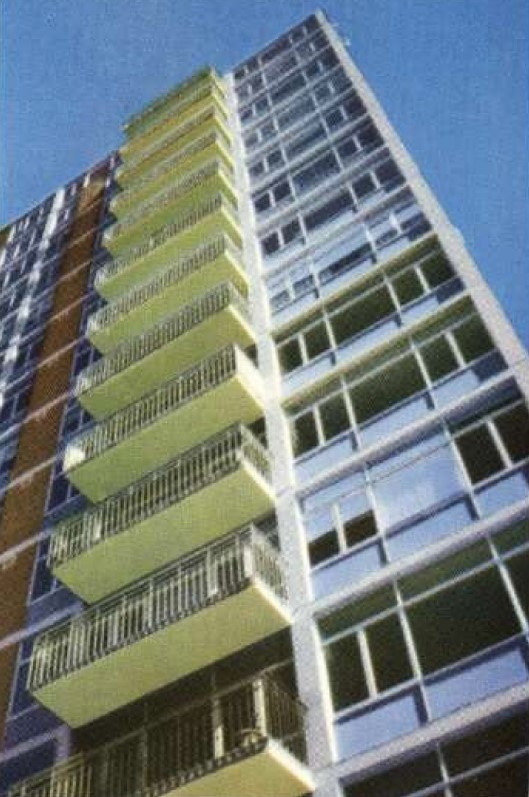
Houses and apartment blocks – spandrel panels on balustrades and curtain walls
Industrial uses
Government buildings and schools, office blocks, motels, all industrial building applications – advertised as interesting infill variation for construction of schools, shopping centres as well as interior partitions in offices and factories.
Be aware
Some approaches to commercial remediation may have incorporated leaving in situ and encapsulating with non-ACM materials.
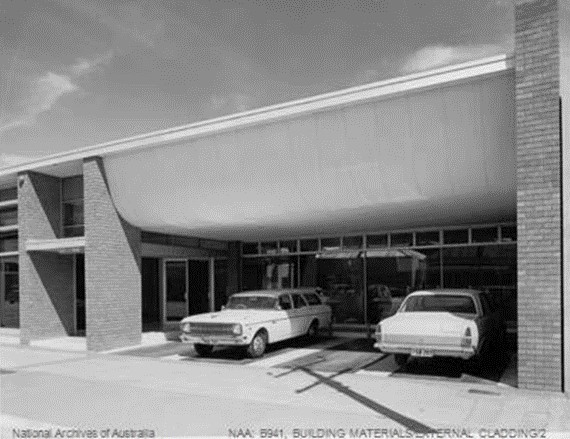
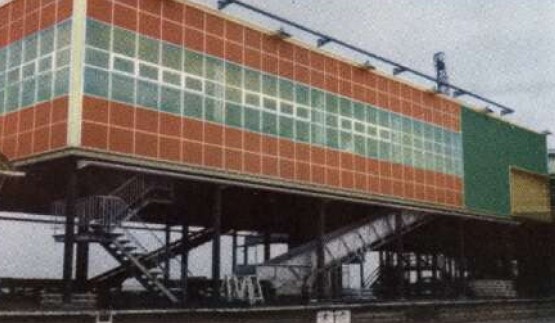
Colorbord over commercial carport circa late 1960s
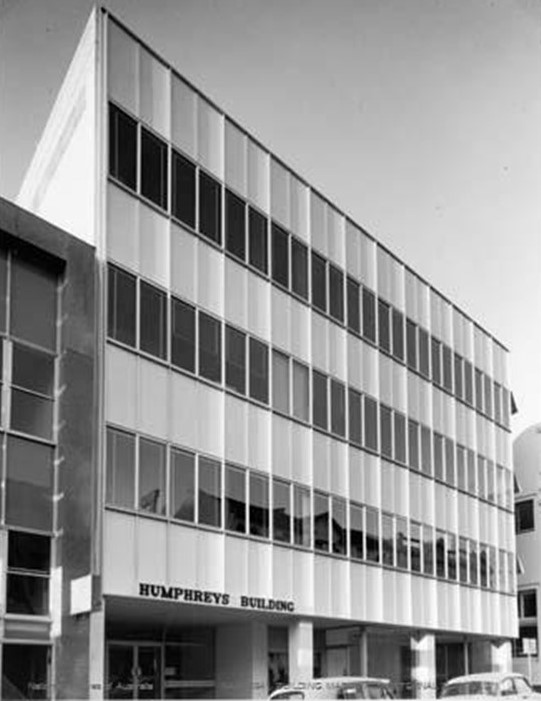
Colorbord curtain walling circa late 1960s
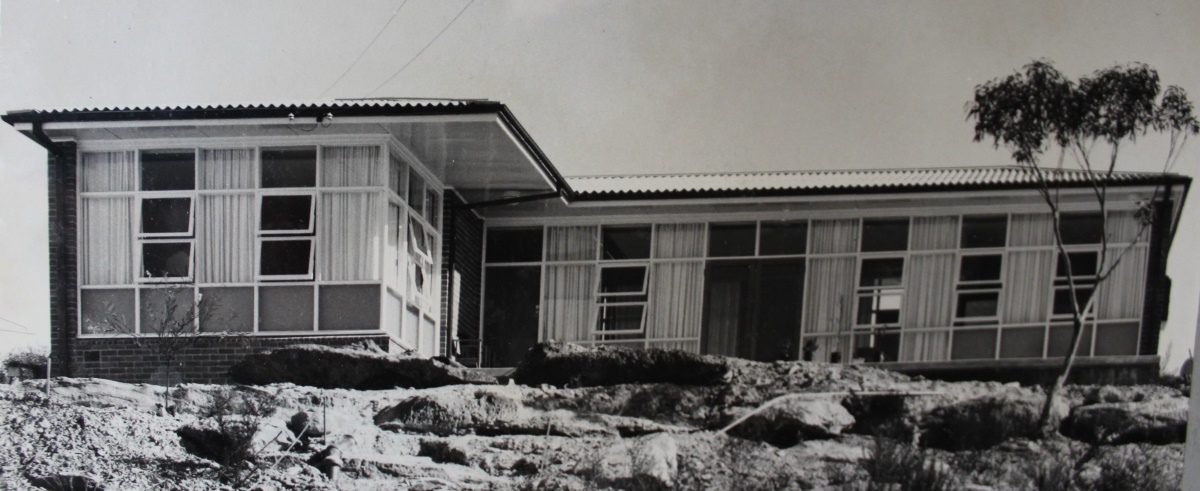
Colorbord spandrels – James Hardie image 1960s – State Library NSW
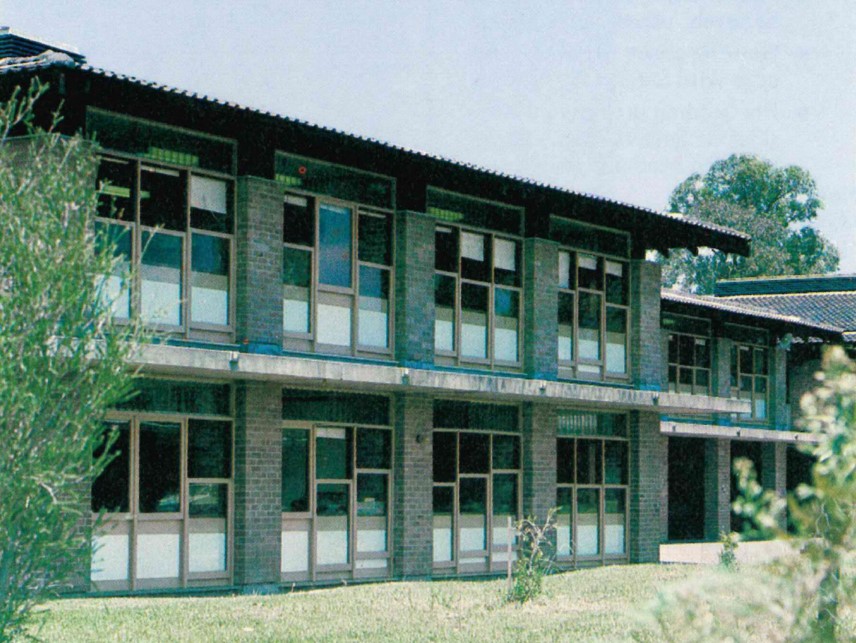
Colorbord spandrels – James Hardie image 1980
Colorbord spandrels – James Hardie image 1980
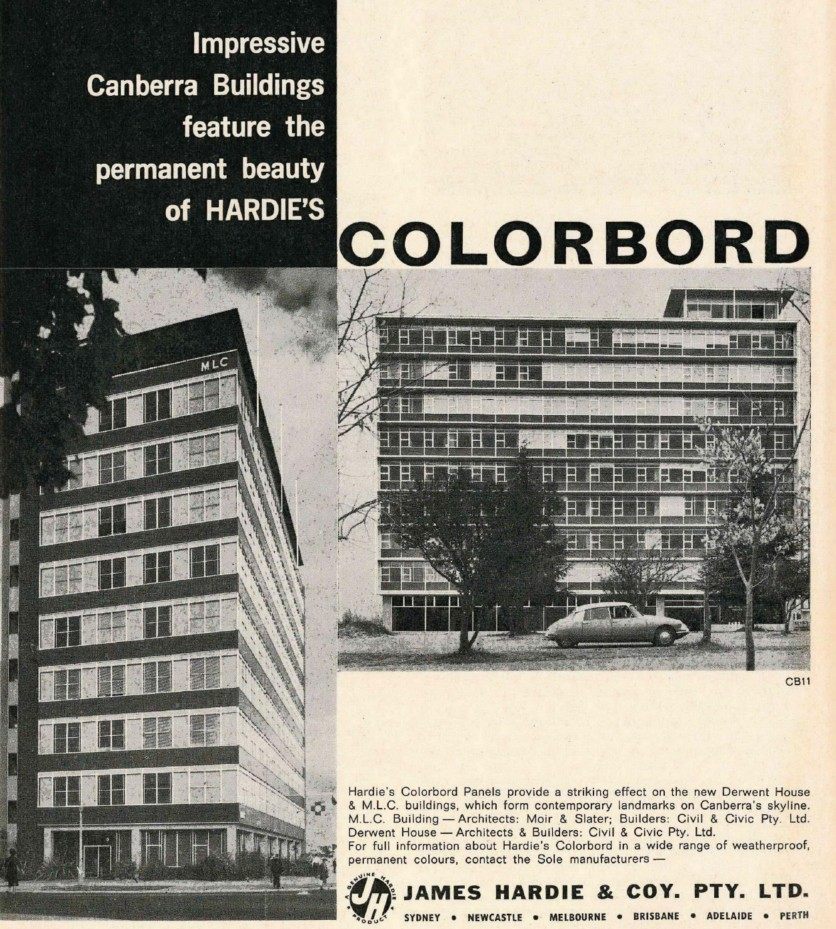
Hardie’s ad 1963 for commercial offices with Colorbord panels – 2 separate buildings. See following images for blg in left image.
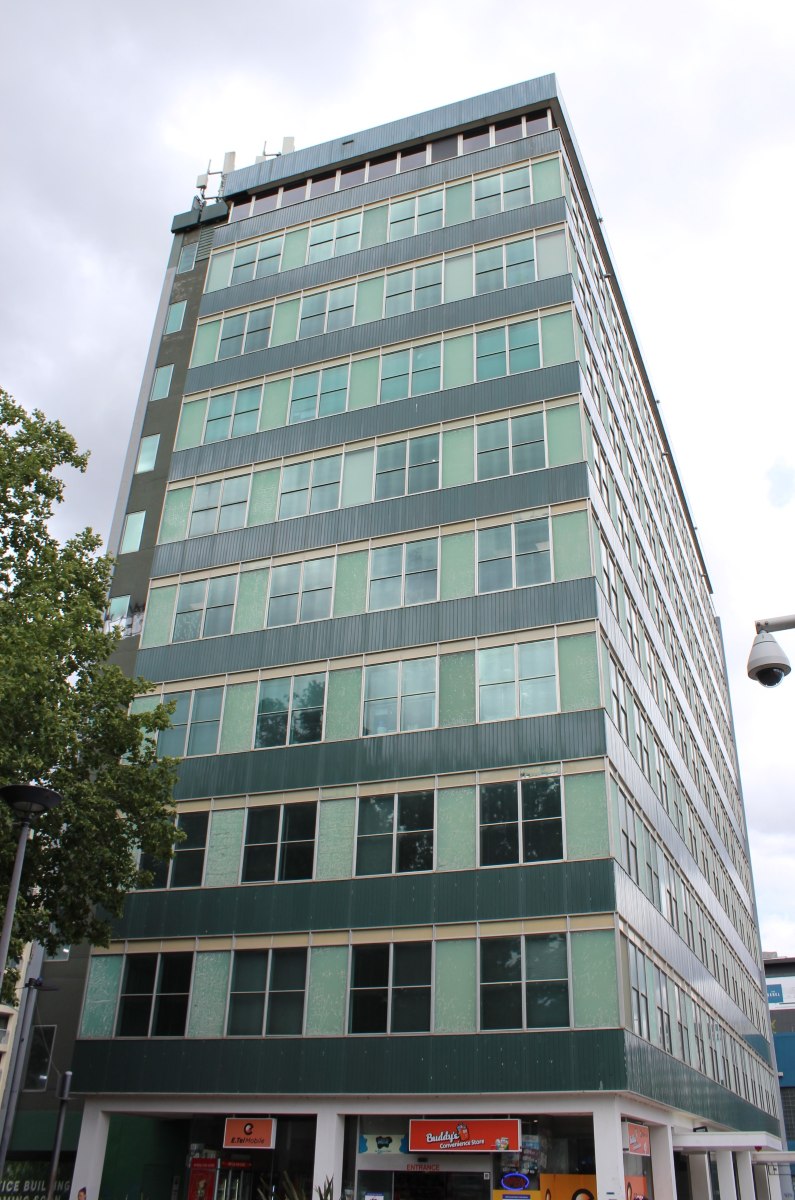
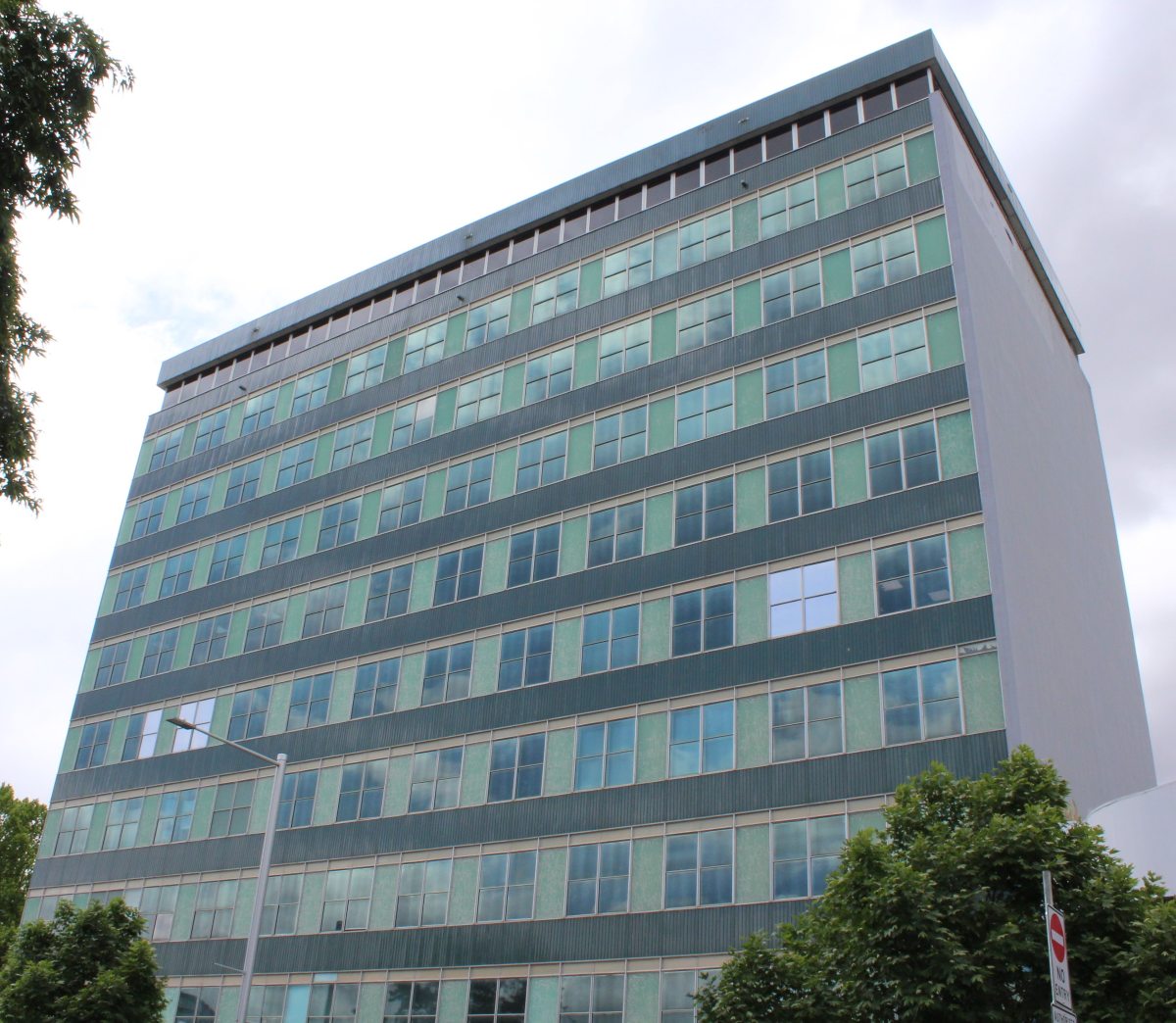
Same commercial office building – same angle 2025. Grey-green Colorbord panels adjacent to windows.
Same commercial office building front 2025
Close up of Colorbord panel with visible deterioration showing delamination of surface from cracking and air/moisture ingress. All in similar condition after 60+ years
Colorbord panels with visible deterioration
Colorbord colour range, James Hardie catalogue 1960s
Colorbord – spandrel and colour range – James Hardie image – MAR1974
Curtain walling Colorbord – James Hardie image 1963
Colorbord balustrades – James Hardie image 1963
Spandrels Colorbord – James Hardie image early 1960s
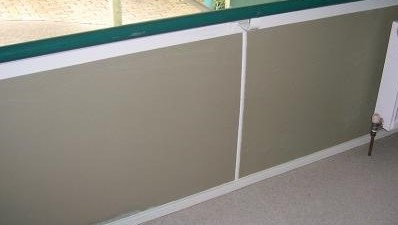
Internal coloured panels in spandrel – likely Colorbord